
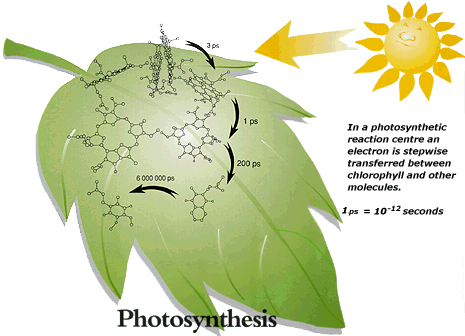

In photosynthesis plants use light to form energy-rich compounds from water and carbon dioxide from the air. The decisive reactions occur in a reaction centre in the cell. The incoming light is caught in an antenna system and finds its way to a pair of chlorophyll molecules (see picture). Within these molecules an electron is lifted to a higher energy level and is then transferred stepwise (follow the arrows) in a well-defined manner. It is important that the first leaps are very fast as otherwise the electron has time to return to the ground state. The Marcus model may explain the speed of these leaps. Finally the electron finds itself in a relatively stable state and still has enough energy to carry out the chemical work necessary for the organism.