Rudolf Eucken
Biographical
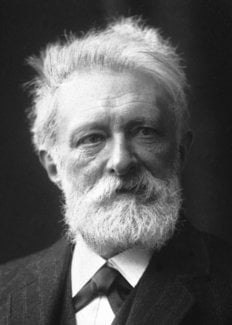
Rudolf Eucken (1846-1926) was born in Aurich, Germany. He studied philosophy, philology, and history at the universities of Göttingen and Berlin and wrote his dissertation on the language of Aristotle. He became a professor of philosophy at Basle in 1871 and from 1874 on held the chair of philosophy at Jena. Eucken was an idealist philosopher who developed his flexible system in many works. He revised his books and brought them up to date over a period of several decades, so that some of his works ran into more than a dozen editions. His main works were Geistige Stromungen der Gegenwart (1908) [Main Currents of Modern Thought ], Die Lebensanschauungen der grosser Denker (1890) [The Problem of Human Life as Viewed by the Great Thinkers from Plato to the Present Time ], Der Kampf um einen geistigen Lebensinhalt (1896) [The Struggle for a Spiritual Content of Life], Der Wahrheitsgehalt der Religion (1901) [The Truth of Religion ], Grundlinien einer neuen Lebensanschauung (1907) [Life’s Basis and Life’s Ideal: The Fundamentals of a New Philosophy of Life ], Present Day Ethics in their Relation to the Spiritual Life (the Deem Lectures given at New York University in 1913), and Der Sinn und Wert des Lebens (1908) [The Meaning and Value of Life ]. Eucken developed his philosophy of history in an essay entitled «Philosophie der Geschichte» (1907), which appeared in the series Die Kultur der Gegenwart [Contemporary Civilization].
This autobiography/biography was written at the time of the award and first published in the book series Les Prix Nobel. It was later edited and republished in Nobel Lectures. To cite this document, always state the source as shown above.
Rudolf Eucken died on September 14, 1926.
The Nobel Foundation's copyright has expired.Nobel Prizes and laureates
Six prizes were awarded for achievements that have conferred the greatest benefit to humankind. The 14 laureates' work and discoveries range from quantum tunnelling to promoting democratic rights.
See them all presented here.