Maurice Maeterlinck
Biographical
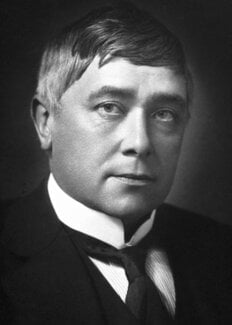
Maurice Maeterlinck (1862-1949), born in Ghent, Belgium, came from a well-to-do family. He was educated at a Jesuit college and read law, but a short practice as a lawyer in his home town convinced him that he was unfit for the profession. He was drawn toward literature during a stay in Paris, where he associated with a number of men of letters, in particular Villiers de l’Isle Adam, who greatly influenced him. Maeterlinck established himself in Paris in 1896 but later lived at Saint-Wandrille, an old Norman abbey that he had restored. He was predominantly a writer of lyrical dramas, but his first work was a collection of poems entitled Serres chaudes [Ardent Talons]. It appeared in 1889, the same year in which his first play, La Princesse Maleine, received enthusiastic praise from Octave Mirbeau, the literary critic of Le Figaro, and made him famous overnight. Lack of action, fatalism, mysticism, and the constant presence of death characterize the works of Maeterlinck’s early period, such as L’Intruse (1890) [The Intruder], Les Aveugles (1890) [The Blind], and the love dramas Pelléas et Mélisande (1892), Alladine et Palomides (1894), and Aglavaine et Sélysette (1896). The shadow of death looms even larger in his later plays, Joyzelle (1903) and Marie Magdeleine (1909), Maeterlinck’s version of a Paul Heyse play, while L’Oiseau bleu (1909) [The Blue Bird] is marked by a fairy-tale optimism. Le Bourgmestre de Stilemonde (1919) [The Burgomaster of Stilemonde] was written under the impact of the First World War.
Maeterlinck developed his strongly mystical ideas in a number of prose works, among them Le Trésor des Humbles (1896) [The Treasure of the Humble], La Sagesse et la destinée (1898) [Wisdom and Destiny], and Le Temple enseveli (1902) [The Buried Temple]. His most popular work was perhaps La Vie des abeilles (1900) [The Life of the Bee], which was followed by L’Intelligence des Fleurs (1907) [The Intelligence of the Flowers], studies of termites (1927), and of ants (1930). In later life, Maeterlinck became known chiefly for his philosophical essays. In 1932 he was given the title of Count of Belgium.
This autobiography/biography was written at the time of the award and first published in the book series Les Prix Nobel. It was later edited and republished in Nobel Lectures. To cite this document, always state the source as shown above.
Maurice Maeterlinck died on May 6, 1949.
The Nobel Foundation's copyright has expired.Nobel Prizes and laureates
Six prizes were awarded for achievements that have conferred the greatest benefit to humankind. The 14 laureates' work and discoveries range from quantum tunnelling to promoting democratic rights.
See them all presented here.

