Gabriela Mistral
Biographical
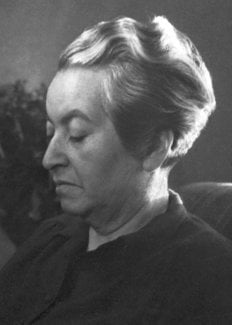
Gabriela Mistral (1889-1957), pseudonym for Lucila Godoy Alcayaga, was born in Vicuña, Chile. The daughter of a dilettante poet, she began to write poetry as a village schoolteacher after a passionate romance with a railway employee who committed suicide. She taught elementary and secondary school for many years until her poetry made her famous. She played an important role in the educational systems of Mexico and Chile, was active in cultural committees of the League of Nations, and was Chilean consul in Naples, Madrid, and Lisbon. She held honorary degrees from the Universities of Florence and Guatemala and was an honorary member of various cultural societies in Chile as well as in the United States, Spain, and Cuba. She taught Spanish literature in the United States at Columbia University, Middlebury College, Vassar College, and at the University of Puerto Rico.
The love poems in memory of the dead, Sonetos de la muerte (1914), made her known throughout Latin America, but her first great collection of poems, Desolación [Despair], was not published until 1922. In 1924 appeared Ternura [Tenderness], a volume of poetry dominated by the theme of childhood; the same theme, linked with that of maternity, plays a significant role in Tala, poems published in 1938. Her complete poetry was published in 1958.
This autobiography/biography was written at the time of the award and first published in the book series Les Prix Nobel. It was later edited and republished in Nobel Lectures. To cite this document, always state the source as shown above.
Gabriela Mistral died on January 10, 1957.
Nobel Prizes and laureates
Six prizes were awarded for achievements that have conferred the greatest benefit to humankind. The 14 laureates' work and discoveries range from quantum tunnelling to promoting democratic rights.
See them all presented here.