Yasunari Kawabata
Biographical
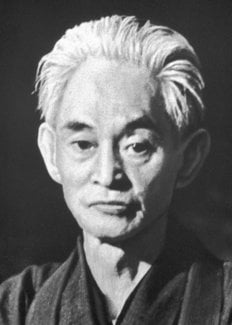
Yasunari Kawabata, son of a highly-cultivated physician, was born in 1899 in Osaka. After the early death of his parents he was raised in the country by his maternal grandfather and attended the Japanese public school. From 1920 to 1924, Kawabata studied at the Tokyo Imperial University, where he received his degree. He was one of the founders of the publication Bungei Jidai, the medium of a new movement in modern Japanese literature. Kawabata made his debut as a writer with the short story, Izu dancer, published in 1927. After several distinguished works, the novel Snow Country in 1937 secured Kawabata’s position as one of the leading authors in Japan. In 1949, the publication of the serials Thousand Cranes and The Sound of the Mountain was commenced. He became a member of the Art Academy of Japan in 1953 and four years later he was appointed chairman of the P.E.N. Club of Japan. At several international congresses Kawabata was the Japanese delegate for this club. The Lake (1955), The Sleeping Beauty (1960) and The Old Capital (1962) belong to his later works, and of these novels, The Old Capital is the one that made the deepest impression in the author’s native country and abroad. In 1959, Kawabata received the Goethe-medal in Frankfurt.
Yasunari Kawabata died in 1972 (suicide).
This autobiography/biography was written at the time of the award and first published in the book series Les Prix Nobel. It was later edited and republished in Nobel Lectures. To cite this document, always state the source as shown above.
Yasunari Kawabata died on April 16, 1972.
Nobel Prizes and laureates
Six prizes were awarded for achievements that have conferred the greatest benefit to humankind. The 14 laureates' work and discoveries range from quantum tunnelling to promoting democratic rights.
See them all presented here.