Charles Richet
Biographical
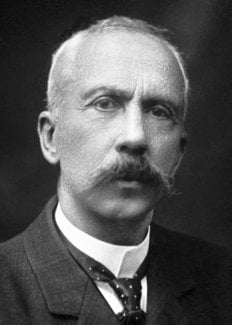
Charles Richet was born on August 26, 1850, in Paris. He was the son of Alfred Richet, Professor of Clinical Surgery in the Faculty of Medicine, Paris, and his wife Eugenie, née Renouard. He studied in Paris, becoming Doctor of Medicine in 1869, Doctor of Sciences in 1878 and Professor of Physiology from 1887 onwards in the Faculty of Medicine, Paris.
For 24 years (1878-1902) he was Editor of the Revue Scientifique, and from 1917 he was co-editor of the Journal de Physiologie et de Pathologie Générale. He has published papers on physiology, physiological chemistry, experimental pathology, normal and pathological psychology and numerous researches all done in the physiological laboratory of the Faculty of Medicine, Paris, where he tried to study normal and pathological facts together with each other.
In physiology, he worked out the mechanism of the thermoregulation in homoiothermic animals. Before his researches (1885-1895) on polypnoea and shivering due to temperature little was known about the methods by which animals deprived of cutaneous transpiration can guard against overheating and how chilled animals can warm themselves again.
In experimental therapeutics Richet showed that the blood of animals vaccinated against an infection protects against this infection (Nov. 1888). Applying this principle to tuberculosis, he did the first serotherapeutic injection done in man (Dec. 6, 1890).
In 1900, Charles Richet showed that feeding milk and raw meat (zomotherapy) might cure tuberculous dogs.
In 1901 he established that by decreasing the sodium chloride in food, potassium bromide is rendered so effective for the treatment of epilepsy that the therapeutic dose falls from 10 g to 2 g.
In 1913, he was awarded the Nobel Prize for his researches on anaphylaxis. He invented this word to designate the sensitivity developed by an organism after it had been given a parenteral injection of a colloid or protein substance or a toxin (1902). Later he demonstrated the facts of passive anaphylaxis and anaphylaxis in vitro. The applications of anaphylaxis to medicine are extremely numerous. Already in 1913, over 4000 memoirs had been published on this question and it plays an important part nowadays in pathology. He showed that in fact parenteral injection of protein substance modifies profoundly and permanently the chemical constitution of the body fluids. Most of Charles Richet’s physiological works scattered in various scientific journals were published in the Travaux du Laboratoire de la Faculté de Médecine de Paris (Alcan, Paris, 6 vols. 1890-1911) (Works of the Physiological Laboratory of the Faculty of Medicine, Paris).
Among his other works are: Suc Gastrique chez l’Homme et chez les Animaux, 1878 (Gastric juice in man and in animals); Leçons sur les Muscles et les Nerfs, 1881 (Lectures on the muscles and nerves); Leçons sur la Chaleur Animale, 1884 (Lectures on animal heat); Essai de Psychologie Générale, 1884 (Essay on general psychology); Souvenirs d’un Physiologiste, 1933 (Memoirs of a physiologist). He was also the editor of Dictionnaire de Physiologie, 1895-1912 (Dictionary of Physiology), of which 9 volumes appeared.
Among his recreations were an interest in spiritualism and the writing of a few dramatic works.
In 1877, Charles Richet married Amélie Aubry. They had five sons, Georges, Jacques, Charles (who, like his father, was Professor in the Faculty of Medicine in Paris and was, in his turn, succeeded by his son Gabriel), Albert and Alfred, and two daughters, Louise (Mme Lesné) and Adèle (Mme le Ber).
He died in Paris on December 4, 1935.
This autobiography/biography was written at the time of the award and first published in the book series Les Prix Nobel. It was later edited and republished in Nobel Lectures. To cite this document, always state the source as shown above.
The Nobel Foundation's copyright has expired.Nobel Prizes and laureates
Six prizes were awarded for achievements that have conferred the greatest benefit to humankind. The 14 laureates' work and discoveries range from quantum tunnelling to promoting democratic rights.
See them all presented here.