Sir Frank Macfarlane Burnet
Biographical
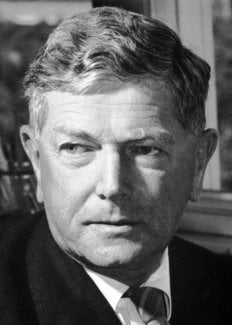
Sir Frank Macfarlane Burnet was born at Traralgon, Victoria, Australia, on September 3rd, 1899. He is the son of the Manager of the branch of the Colonial Bank in that town. He was educated at the Victoria State Schools and at Geelong College, completing his medical course at the University of Melbourne, where he graduated M.B., B.S., in 1922, and M.D., in 1923.
In 1923, Burnet went to the Walter and Eliza Hall Institute of the University of Melbourne to do research work on the agglutinin reactions in typhoid fever. He was from 1923-1924 Resident Pathologist at the Melbourne Hospital.
In 1926 he was awarded a Beit Fellowship for Medical Research and worked for a year at the Lister Institute, London.
In 1932 he spent a year at the National Institute for Medical Research, Hampstead, London. Otherwise, apart from many visits to various countries to give lectures or for other purposes, he has worked continuously at the Hall Institute in Melbourne.
In 1944 he became Director of this Institute and Professor of Experimental Medicine in the University of Melbourne.
It is impossible to give, in a brief space, an adequate idea of the range and fundamental importance of Burnet’s work. His work on the agglutinins of typhoid fever mentioned above was followed by the work on viruses for which he is nowadays justly famous. In 1935 he isolated a strain of influenza A virus in Australia, and subsequently did much work on serological variations of the influenza virus and on Australian strains of the swine influenza. He also published papers on variations in the virulence of influenza virus and on the mutation rates in it, which he calculated.
In 1946, in collaboration with W. I. B. Beveridge, Burnet devised a technique for cultivating viruses on the chorioallantoic membrane of chicken embryos and a method for determining the relative concentration of the material inoculated into these membranes by counting and statistically analysing the number of lesions that then appear on the membranes.
In 1947 he discovered, in collaboration with Stone, the receptor-destroying enzyme present in Vibrio cholerae, a discovery which led to the synthesis of neuraminic acid and to the demonstration, by Gottschalk and Cornforth, that purified influenza virus will quantitatively split the acetylgalactosamine neuraminic acid compound. Later it was shown that this enzyme derived from Vibrio cholerae can prevent infection by the influenza to a significant degree.
Burnet did much other important work on certain aspects of the prevention of virus infections and on important biological aspects of virus growth inside the cells in which they can live. He found that the filamentous forms of some viruses (e.g. those of myxoviruses such as those which cause influenza, mumps, fowl plague, and Newcastle disease) can be ruptured by suspending them in water, and suggested that their infectivity is limited to their tips, so that these filamentous forms can, as later work showed, be regarded as having an infective «warhead» composed of nucleic acid and a long tail composed of non-infective viral haemagglutinin.
Other aspects of Burnet’s work are his work on the surface properties of these filamentous forms, which are, he found, similar to those of cell surfaces, and his work with the haemagglutinin found in extracts of tissue infected with vaccinia, which can, he found, be precipitated by a saturated solution of ammonium sulphate and by cobra venom. He has also added much to our knowledge of the haemagglutination of red blood cells by various animal viruses, and has made contributions of fundamental importance to our knowledge of the genetic complexity of virus particles, and to the genetic interactions between related viruses which simultaneously infect the same cell and their relations to the transfer of neuropathogenicity. In addition, he has increased our knowledge of the inhibition of viruses by various substances, and of the complex details of immunological methods of studying viruses and of the immunology of viral infections.
Burnet has embodied his experience and experimental results, not only in numerous scientific papers, but in several books which show that he is a master, not only of a clear and attractive literary style, but also of lucid exposition of complex ideas and scientific facts.
Burnet received many honours and distinctions, among which the Fellowship of the Royal Society of London (1942), where he was awarded the Royal Medal in 1947 and the Copley Medal in 1959, and where he delivered the Croonian Lecture in 1950. He holds an honorary doctorate of the University of Cambridge, and was made a Fellow of the Royal College of Surgeons in 1953. He was knighted in 1951, and in 1958 he received the Order of Merit.
Burnet married Edith Linda Druce in 1928. They have one son, Ian, and two daughters, Elizabeth (Mrs. Paul M. Dexter) and Deborah (Mrs. John Giddy).
This autobiography/biography was written at the time of the award and first published in the book series Les Prix Nobel. It was later edited and republished in Nobel Lectures. To cite this document, always state the source as shown above.
For more updated biographical information, see:
Burnet, Frank Macfarlane. Changing Patterns: An Atypical Autobiography. Heinemann, Melbourne, 1968.
Sir Frank Macfarlane Burnet died on August 31, 1985.
Nobel Prizes and laureates
Six prizes were awarded for achievements that have conferred the greatest benefit to humankind. The 14 laureates' work and discoveries range from quantum tunnelling to promoting democratic rights.
See them all presented here.