Auguste Beernaert
Biographical
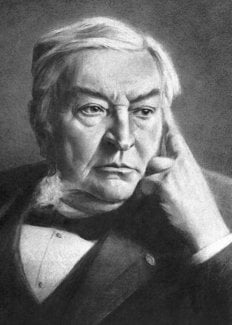
Auguste Marie François Beernaert (July 26, 1829-October 6, 1912) was born in Ostend, Belgium, in a middle-class Catholic family of Flemish origin. His father was a government functionary whose changing appointments took the family from Ostend to Dinant and then to Namur, where Auguste and his sister spent their childhood. Their early education was undertaken by their mother, a woman of outstanding intelligence and moral character. Admitted to the University of Louvain in 1846, Beernaert took his doctorate in law in 1851 with the highest distinction. Awarded a traveling fellowship, he spent two years at the Universities of Paris, Heidelberg, and Berlin, studying the status of legal education in France and Germany and upon his return to Belgium submitting a report of his findings – later published – to the minister of the Interior.
Admitted to the bar in 1853, he clerked for a time for Hubert Dolez, a prominent lawyer and former president of the Chamber of Representatives, then set up an independent practice, specializing in fiscal law. In the next twenty years his essays in legal journals earned him a reputation as a scholar, and his practice a comfortable fortune. Consequently, there was some surprise expressed in Belgian legal circles when he gave up his practice in 1873 to become the minister of public works in Jules Malou’s conservative Catholic cabinet. In the next five years Beernaert proved to be an able and energetic administrator. He improved the country’s rail, canal, and road systems, established new port facilities at Ostend and Anvers, and beautified the capital, but he failed in his attempt to end child labor in the mines. In June of 1874 he lost a contest for a seat in the Senate but three months later won an election in the west Flanders town of Thielt, a constituency which re-elected him until his death.
When the Catholic Party, defeated in 1878, was returned to power in 1884, Beernaert was named minister of the Department of Agriculture, Industry, and Public Works in the new cabinet. Four months later, after some resignations from the cabinet, King Leopold II entrusted Beernaert with the direction of the government.
Beernaert was prime minister of Belgium and finance minister for the next ten years. Under his administration the budget was balanced; the Flemish language was protected; the independent State of the Congo was created in 1885 and the title of sovereign of that land given to Leopold who had personally been largely responsible for its development; social and judicial reforms designed to protect the welfare of the workingman were instituted in 1887 in the wake of riots in that year; military fortifications on the Meuse were constructed in order to defend Belgian neutrality; the constitution of 1831 was revised, the right of suffrage being granted to ten times the number of citizens who had formerly enjoyed it.
On another constitutional question, that of proportional representation, the cabinet fell in 1894. Although he returned to his law practice, Beernaert continued to serve in the government. He accepted the advisory post of minister of state and from 1895 to 1900 served as the president of the Chamber of Representatives, being elected by his colleagues. A lifelong patron of the arts, he was selected to head the Commission of Museums and Arts. During this period he engaged actively in international attempts to abolish slavery and solidified into active opposition his dismay at the exploitation of the Congo that had troubled his relationship with Leopold in the last part of his tenure as prime minister.
One of Belgium’s leading pacifists, Beernaert became an active member of the Interparliamentary Union after he resigned from the prime ministry, presided over several of its conferences, and served as president of its Council after 1899 and of its Executive Committee after its creation in 1908. At the Peace Conference at The Hague in 1899 he presided over the First Commission on arms limitation; at the Conference of 1907, over the Second Commission on codification of land war. He was a member of the Permanent Court of Arbitration; he represented Mexico in 1902 in the dispute with the United States, the first case to be brought before the Court; and on many occasions he acted as arbiter of international quarrels. Beernaert was the primary force behind proposals to unify international maritime law; those resulting from the international conferences of 1885 and 1888, convened on his initiative, failed of adoption by the several nations, but the conventions dealing with collision and assistance at sea drawn up in 1910 at the conference in Brussels under his chairmanship were soon signed by many nations. He exemplified his own aphorism: «The first virtue of politics and the first element of success is perseverance».1
On his way home from the 1912 Geneva conference of the Interparliamentary Union on the prohibition of air warfare, Beernaert was hospitalized in Lucerne where he died of pneumonia. He was buried at Boitsfort with the simplest of ceremonies, as he had requested.
| Selected Bibliography |
| Beernaert, Auguste Marie François, De l’état de l’enseignement du droit en France et en Allemagne: Rapport adressé à M. le Ministre de l’Intérieur. Bruxelles, Lesigne, 1854. |
| Beernaert, Auguste Marie François, Discours prononcé à l’occasion de l’inauguration des quais d’Anvers, le 26 juillet 1885. Paris, Chaix, 1885. |
| Carton de Wiart, Edmond, Auguste Beernaert: Sa Vie et son œuvre. Gand, 1910. |
| Carton de Wiart, Edmond, Léopold II: Souvenirs des dernières années, 1901-1909. Bruxelles, Goemaere, 1944. |
| Carton de Wiart, Henri, Beernaert et son temps. Bruxelles, La Renaissance du Livre, 1945. |
| Carton de Wiart, Henri, «Notice sur Auguste Beernaert», Annuaire de l’Académie Royale de Belgique, 105 (1939) 293-364. Contains a bibliography. |
| Collin, Paul-Victor, «Un Homme d’état: Auguste Beernaert, 1829-1912», Res Publica, 3 (1961) 251-254. |
| De Ridder, A., «Léopold II, M. Beernaert, et la défense rationale», La Revue Générale, 104 (juillet 1920) 30 – 48. |
| Jaspar, Henri, «Auguste Beernaert: Discours prononcé à Ostende a l’inauguration de monument», La Revue Belge, 4e année, Tome IV (15 octobre 1927) 181-192. |
| Lettenhove, H. Kervyn de, «M. Beernaert: Ami et protecteur des arts», La Revue Belge, 4e année, Tome IV (15 octobre 1927) 111-122. |
| Lyon-Caen, Charles, «Notice sur la vie et les travaux d’Auguste Beernaert (1829-1912)» , Séances et travaux de l’Académie des sciences morales et politiques: Compte-rendu 89e année, Paris, Alcan, 1929, pp. 33-57. |
| Mélot, Auguste, «Beernaert et le Congo, 1884-1894», La Revue Générale, 127 (février 1932) 147-167. |
| Mélot, Auguste, «Beernaert I: Le Régime bourgeois et la législation sociale», La Revue Générale, 118 (août 1927) 129-144. |
| Mélot, Auguste, «Beernaert II: L’Introduction du régime démocratique», La Revue Générale, 118 (septembre 1927) 299-314. |
| Passelecq, Ferdinand, Auguste Beernaert – sa carrière et son œuvre politique: Notes pour servir à l’histoire de l’évolution des idées dans le parti catholique belge après 1878. Bruxelles, Dewit, 1912. |
| Van der Smissen, Édouard, Léopold et Beernaert d’après leur correspondance inédité de 1884 à 1894. 2 Tomes. Bruxelles, 1920. |
| Woeste, Charles , Mémoires pour servir à l’histoire contemporaine. 3 Tomes. Bruxelles, Dewit, 1927-1937. |
1. Henri Carton de Wiart, Beernaert et son temps, p. 139.
This autobiography/biography was written at the time of the award and first published in the book series Les Prix Nobel. It was later edited and republished in Nobel Lectures. To cite this document, always state the source as shown above.
The Nobel Foundation's copyright has expired.Nobel Prizes and laureates
Six prizes were awarded for achievements that have conferred the greatest benefit to humankind. The 14 laureates' work and discoveries range from quantum tunnelling to promoting democratic rights.
See them all presented here.

