Adolfo Pérez Esquivel
Biographical
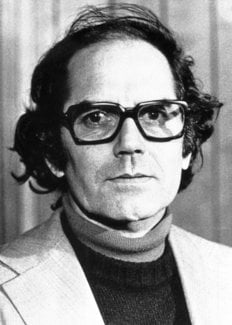
Adolfo Pérez Esquivel was born in Buenos Aires in 1931. After training as an architect and sculptor he was appointed Professor of Architecture. In 1974 he relinquished his teaching post in order to devote all his time and energy to the work of co-ordinating the activities of the various non-violent elements in Latin America. It was at a conference in Montevideo in 1968 that the decision was made to set up a joint organisation covering all non-violent elements throughout Latin America. At a conference in 1974 it was decided to give the organisation a more permanent form, and Pérez Esquivel was appointed its Secretary-General. In 1976 he initiated an international campaign aimed at persuading the United Nations to establish a Human Rights Commission, and in this connection a document was drawn up recording breaches of human rights in Latin America. In the Spring of 1977 Pérez Esquivel was imprisoned without cause being shown. In May 1978 he was released, but with the obligation to report to the police as well as being subject to various restrictions. These have subsequently been allowed to lapse, and in 1980 he had an opportunity of visiting Europe.
The organisation of which Pérez Esquivel is the leader, Servicio Paz y Justicia, is a well-established one. Latin America is divided into three regions, each with its own offices, and under these come the national organisations. Their activities are co-ordinated from Pérez Esquivel’s office in Buenos Aires.
The organisation is based on a Christian view of life, and enjoys close contact with clergy and bishops critical of present-day conditions in Latin America. The chief task of the movement is to promote respect for human rights, a phrase that is intended to include social and economic rights. On the practical level this means that Servicio provides assistance to the rural workers in their struggle for land, and to the trade unions in their struggle to protect the rights of their workers. This is done inter alia in the form of legal aid.
Despite the opposition he has encountered, Pérez Esquivel insists that the struggle must only be waged with non-violent means.
This autobiography/biography was written at the time of the award and later published in the book series Les Prix Nobel/ Nobel Lectures/The Nobel Prizes. The information is sometimes updated with an addendum submitted by the Laureate.
Nobel Prizes and laureates
Six prizes were awarded for achievements that have conferred the greatest benefit to humankind. The 14 laureates' work and discoveries range from quantum tunnelling to promoting democratic rights.
See them all presented here.