James Franck
Facts
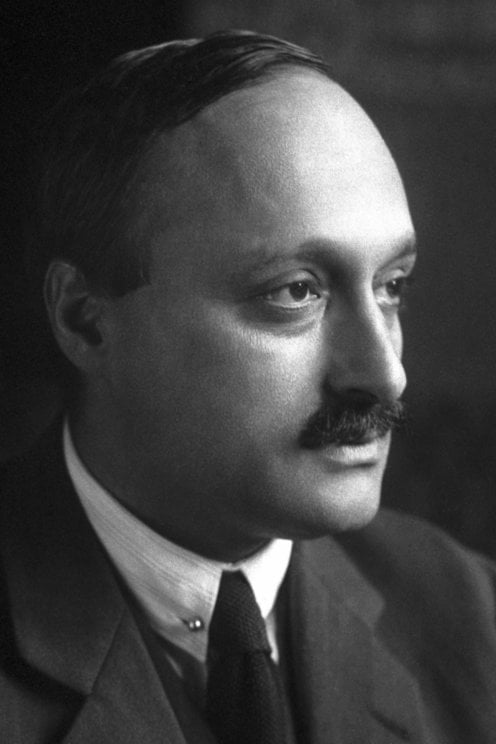
Photo from the Nobel Foundation archive.
James Franck
Nobel Prize in Physics 1925
Born: 26 August 1882, Hamburg, Germany
Died: 21 May 1964, Göttingen, West Germany (now Germany)
Affiliation at the time of the award: Goettingen University, Göttingen, Germany
Prize motivation: “for their discovery of the laws governing the impact of an electron upon an atom”
James Franck received his Nobel Prize one year later, in 1926.
Prize share: 1/2
Work
In 1914, Gustav Hertz and James Franck conducted an experiment, in which a potential difference was applied to a tube containing a low-pressure gas. When increased, the current flowing through the tube also increased until the voltage reached a certain level, when it suddenly declined. The result supported Niels Bohr’s theory on the structure of the atom, in which electrons can only have specific, discrete energies. The potential difference increased the free electrons’ mobility until, at a certain energy level, bound electrons jumped to a higher-energy orbit instead.
Nobel Prizes and laureates
Six prizes were awarded for achievements that have conferred the greatest benefit to humankind. The 14 laureates' work and discoveries range from quantum tunnelling to promoting democratic rights.
See them all presented here.