Prion diseases arise in three different ways


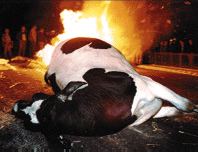
1. Through horizontal transmission from e.g. a sheep to a cow (BSE).

2. In inherited forms, mutations in the prion gene are transmitted from parent to child.

3. They can arise spontaneously.

Route of infection

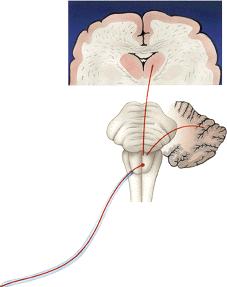
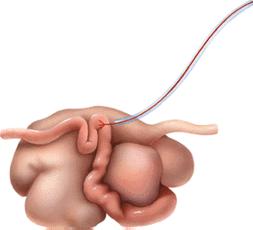
When cows are fed with offals prepared from infected sheep, prions are taken up from the gut and transported along nerve fibers to the brain stem. Here prions accumulate and convert normal prion proteins to the disease-causing form, PrPSc. Years later, BSE results when a sufficient number of nerve cells have become damaged, affecting the behaviour of the cows.


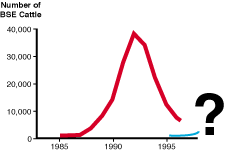
The kuru epidemic started a long time ago and has subsided since the 1950s. The mad cow disease epidemic started in 1985 affecting approximately 170,000 cows.
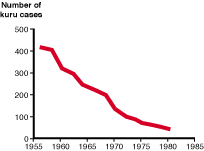
Kuru disease   Mad cow disease


The graph shows how kuru disappeared among the Fore-people when they stopped their cannibalistic rituals. In children the disease disappeared more rapidly, while adults continued to be affected. An incubation time of up to 30 years has been reported.   The graph shows the course of the BSE epidemic. It reached its maximum in 1992 with 37,000 affected animals. When feedstuff containing sheep offals was banned, the incidence of BSE decreased rapidly. There is now a fear that humans might have been infected by eating products from BSE-affected cows giving rise to a new variant type of CJD.

To cite this section
MLA style: Prion diseases arise in three different ways. NobelPrize.org. Nobel Prize Outreach 2025. Fri. 5 Dec 2025. <https://www.nobelprize.org/prizes/medicine/1997/7840-prion-diseases-arise-in-three-different-ways/>

Streams during Nobel Week

Watch the 2025 Nobel Prize lectures, Nobel Week Dialogue, the prize award ceremonies in Oslo and Stockholm and Nobel Peace Prize Forum here at nobelprize.org.

Explore prizes and laureates

Look for popular awards and laureates in different fields, and discover the history of the Nobel Prize.